
Economy
Banks are cutting credit card perks quietly; Learn how to get more value from your wallet
indiatimes.com
•1 June 2026, 4:00 AM
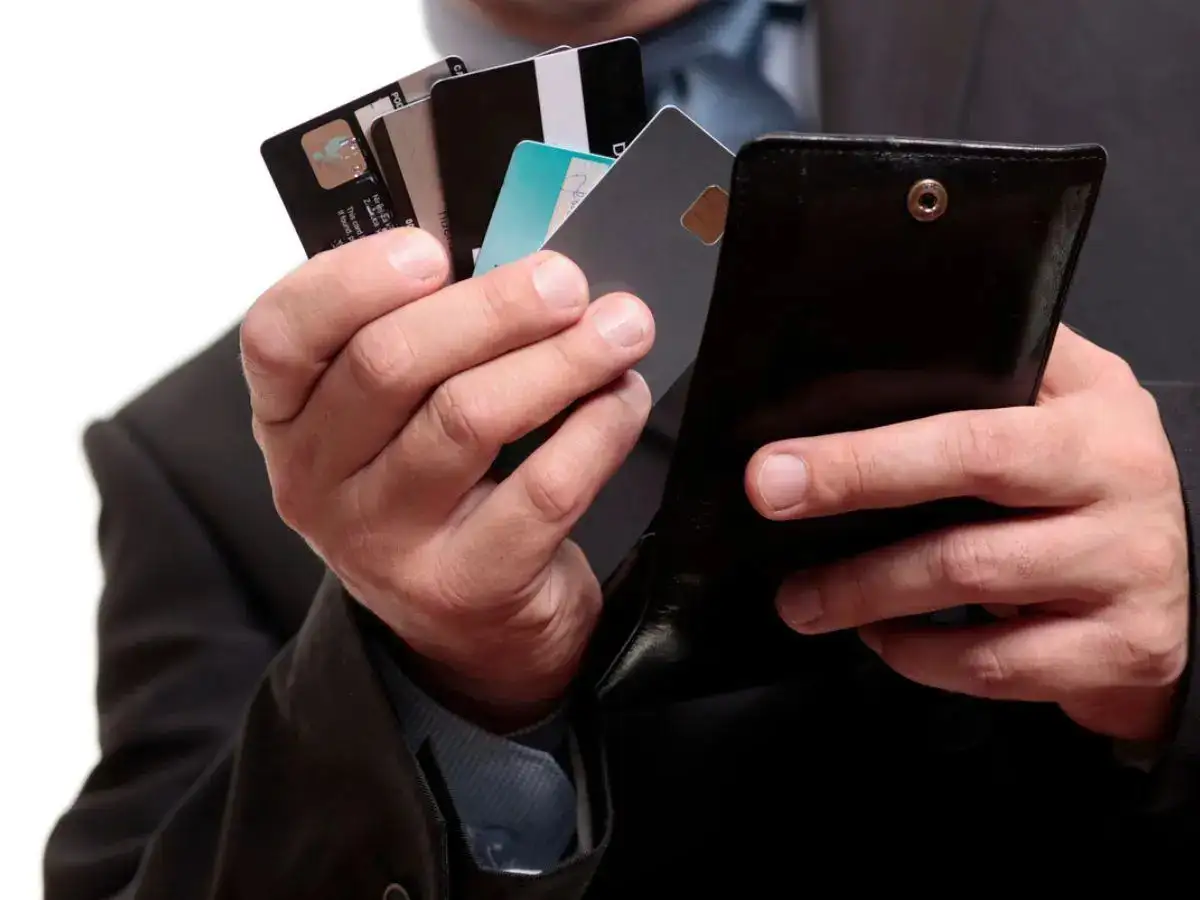

Weeks before the end of fiscal 2025–26, many credit card issuers announced or implemented significant changes to their reward structures. These included some banks overhauling points redemption limits, linking points accumulation to spending tiers, and devaluing some cards by revoking or restricting perks.Income Tax GuideIncome Tax Union Budget FY 2026-27 LiveIncome Tax Slabs FY 2025-26Income Tax Calculator 2025In most cases, banks introduce these cutbacks once they have acquired a sizeable customer base or when the perks in question start taking a toll on their revenues.Vinit Bajaj, Group Head—Cards, Axis Bank, sees it differently. “We would like to refer to it as reward recalibration, and not devaluation; and this recent wave reflects a broader shift from broad-based, high-cost benefits to more targeted, usage-linked reward structures,” he explains.As a cardholder, the need of the hour is to visit your issuer’s portal and review the changes applicable to your card.
For instance, State Bank of India’s (SBI) Cashback card still earns a 5% cashback on online expenditures and 1% on offline spends, but these monthly yields are now capped at ₹2,000 in each category—i.e. users cannot earn a cashback over ₹4,000 in a month. For holders of HDFC Bank’s mid-tier Regalia Gold, the three visits to domestic airport lounges per calendar year quarter are now conditional on a minimum expenditure of ₹60,000 in the preceding three-month period.
Meanwhile, users of Kotak Mahindra Bank’s top-tier White Reserve continue to receive a 1% fuel surcharge waiver, but the cumulative relief is capped at ₹4,500 per calendar year.You would rightly feel that the rewards linked to your credit card have depreciated but resist the urge to turn scissor-happy and cut the plastic or metal in your wallet into pieces. Tweaking your monthly spending and using your reward points with a long-term view can best help you play the hand you have been dealt. Akshit K. 33Karwar, KarnatakaCards in his walletCanara Bank Visa ClassicHDFC Bank MillenniaKotak Mahindra Bank ZenPreferred usage benefitCashback on retail spendingWhy he is diversifyingTo explore cards that offer better cashback ratio as he expects his expenses to rise soonNote: "I utilise the cashback (from the Canara Bank card) regularly to watch movies, on food deliveries, some bill payments, and for booking tickets to my ancestral home."Reap the benefits at your disposalSaurabh Mendiratta, a Delhi-based environmental project manager, has been holding on to his Axis Bank My Zone card—a mid-tier offering—since 2016, when he entered the white-collar workforce.An avid cinemagoer, he recalls frequently swiping it for a few years to avail the buy-one-get-one (BOGO) offer on movie tickets for him and another family member. If he bought a ticket on any Axis Bank partner platform, he would get another ticket at a discount of up to ₹200.
This offer could be availed twice a month. However, the private lender clamped down on this perk in 2023, limiting it to one ticket per month.Nevertheless, Mendiratta found the My Zone handy in regularly paying off small-ticket structural, or ‘boring’, expenses—these included utility bills, refuelling at petrol pumps, taxes or fines, insurance premiums, and gold/jewellery purchases. In doing so, he earned some decent ‘EDGE’ points that Axis Bank rewarded for regular swiping.This did not last long, though: between 2023 and 2024, Axis Bank altogether excluded ‘boring’ payments as a spending category that would earn My Zone users any points.The east Delhi native did find simple workarounds to compensate for the reward shortfalls, though. A few years after he bought the My Zone, he added an HDFC Bank Diners Club Privilege card—a relatively premium product—to his wallet.Mendiratta has ticked the usual life milestones over the past few years—getting married, switching employers for incrementally better compensation, funding his sister’s wedding, and upgrading from a modest hatchback to a mid-sized SUV.He has been offloading many expenditures to the extent possible from the My Zone to the Privilege card, including the ‘boring’ payments, realising that the latter would earn him more rewards, albeit with certain caps and riders.“For instance, I manage to spend above ₹1,50,000 in a quarter on the Privilege, and that earns me vouchers worth ₹1,500 on select merchants,” Mendiratta explains.Yet, the My Zone occupies a slot in Mendiratta’s wallet.
Why so? “It’s a lifetime-free card for me, so I put of 20% of my monthly household expenses on it. I use the points earned to avail of discounts on shopping vouchers at Ajio outlets or dining at partner restaurants,” he says.Parijat Garg, an independent digital lending consultant and credit advisor, agrees on having a well-balanced portfolio in one’s pocket. “It really depends on a person’s ability to manage, or be disciplined about, their spending—in terms of repayments, tracking, and all of that. Otherwise, I would say 2–3 cards are ideal. The reason is that if you move or travel a lot and your card does not work, what then?
Having at least two cards gives you that flexibility... a sort of risk mitigation.”Aviation and travel writer Ajay Awtaney suggests that cardholders need not go overboard. “Different credit cards are offered to different types of customers based on their credit profile—income, repayment assessment and so on. Customers should not have their cards upgraded just to get, say, travel benefits if they do not travel often.” Saurabh Mendiratta, 32New DelhiCards in his walletHDFC Bank Diners Club PrivilegeAxis Bank My ZonePreferred usage benefitMonthly reward vouchersWhy he is diversifyingPerks on his first-ever card kept getting devalued over timeNote: I manage to spend above Rs.1,50,000 in a quarter on the Privilege (card), and that earns me vouchers worth Rs.1,500 on select merchants.Move beyond ‘few frills’Elsewhere in Karwar, Karnataka, Akshit K. dipped his toes in the credit card pool rather recently. A manager at a lending institution based in Bengaluru, his go-to product is a Canara Bank Visa Classic he got in 2023.Akshit claims he started with this ‘few-frills-few-perks’ option because cards issued by the public sector bank are largely insulated from the waves of rewards revamp and devaluation that hit private banks regularly.For every ₹100 spent at any retail outlet, the Classic earns Akshit a modest two reward points. Each point is worth ₹0.25, effectively giving him 0.5% cashback on all retail purchases.
With respect to the expiration of reward points, Canara Bank is among the major issuer banks in India—the others being Axis and HDFC—that have a three-year usage deadline. Moreover, living in a tier-3, albeit rapidly urbanising, coastal city like Karwar means Akshit’s cost of living is significantly lower than in a metro like Delhi.This means he accumulates plenty of points as cashback, which he can later use to meet the needs of his wife and three-year-old daughter living in nearby Udupi, whom he visits on the weekends. “I utilise the cashback regularly to watch movies, on food deliveries, some bill payments, and for booking tickets to my ancestral home in Kerala on travel portals,” he explains.The relatively flat ₹0.25 cashback value, though, means there is no benefit in racking up points for these three years.
Hence, it is best to redeem them as soon as they hit the 1,000-point minimum.While a more rewarding card is always a viable option for Akshit, Awtaney offers a nuanced perspective. “There are two kinds of credit card users: if you prefer cashback to rewards and find it easier to digest, you should continue (with cashback cards) to reduce the learning curve. However, (if the user prefers rewards) the better value will most likely come through credit cards that offer points.”That said, Akshit did start diversifying by signing up for an HDFC Bank Millennia card he got in 2024, and a Kotak Mahindra Bank Zen card issued this year. “I am exploring offers on these cards and waiting for the ones that are most attractive,” he says.He foresees mounting expenses once their energetic daughter starts preschool, and shifting his regular spending to either of these cards may bear more fruit.For instance, the Millennia offers 1% cashback on all retail spends and 5% on at least 10 online merchants that have partnered with HDFC Bank—compared to the Visa Classic’s 0.5%. The Zen, meanwhile, has better travel benefits than the Visa Classic. If he flies regularly to his hometown, he can avail up to eight domestic lounge visits per year (2 per quarter, subject to a ₹75,000 quarterly spend).
The Visa Classic, meanwhile, offers none. Given that Akshit is partial to state-owned banks, he is free to choose an entry-level product like Bank of Baroda’s BOBCARD Cashback, which offers 5% cashback on eligible online spends (up to ₹1,500 per month) and unlimited 1% cashback on all other transactions.What does the data say?The December 2025 edition of the ‘Payment Systems Report’ issued by the Reserve Bank of India (RBI), released earlier this month, shows that debit card usage has declined sharply over the years.Since 2021, debit card transactions have been declining in both volume and value. In volume terms, they declined from a little over four billion in 2021 to 1.3 billion in calendar year 2025; in value terms, the drop was from ₹7.4 lakh crore to ₹4.5 lakh crore during the period under review.By comparison, credit card transaction volume grew more than twofold, from 2.16 billion in 2021 to 5.7 billion last year. In value terms, the figure for credit cards surged from ₹8.9 lakh crore to ₹23.2 lakh crore in the same period.
Despite this encouraging trend, card payments—be it credit or debit—dwarf compared to the numbers posted by the Unified Payments Interface (UPI), the nation’s indigenous instant interbank payments service. UPI transaction volumes grew from 38.7 billion in 2021 to 228.3 billion in 2025. The transaction value, meanwhile, grew from ₹72 lakh crore to ₹300 lakh crore.A fundamental reason for this chasm between UPI and card—debit or credit—numbers is the ticket size of each transaction. The RBI report states that the average ticket size of a UPI transaction fell from ₹1,848 to ₹1,313 during the four-year period.
In comparison, the average ticket size of a credit card transaction (total value divided by total volume) in 2025 comes to ₹4,070—almost thrice that of UPI.Bajaj of Axis Bank sees this trend less a replacement and more a clear separation of use cases in the market. “UPI has become the preferred mode for high-frequency, small-ticket transactions, driven by its convenience and near-universal acceptance. Credit cards, however, continue to play a strong role in higher-value transactions, driven by rewards, credit access, and EMI-led purchasing behaviour.”Garg says, “There are broadly three categories of spending. One of the most frequent-used category is grocery and food. Second one constitutes entertainment and commuting, which you do multiple times a month.
The third one is the larger bucket—like rent, travel, flights, or hotels—that happens every one, two, or three months. If you look at spending on UPI, a lot of these first and second category transactions could be there.”Twinning benefitYour existing credit card can easily tap into this vast UPI marketplace of routine, small-ticket expenses. Instead of buying a new one, upgrading your existing card can earn you rewards/cashbacks.If you own a Visa or Mastercard product, request your bank for a twin RuPay card, which will be issued under a shared credit limit and a floated account ecosystem. This means that if your primary Visa/Mastercard card has a credit limit of ₹5 lakh, your new RuPay card will have the same limit.The twin card is an eco-friendly option, as most banks issue it as a virtual card in their mobile banking apps.
Instead of a physical plastic card, you can get the card details to instantly link to their UPI app. Nearly all scheduled commercial banks will offer your card a RuPay twin. Keep in mind: though the RuPay twin card can function through your UPI app, it is still a credit card. Money can only be transferred to verified merchants, not to personal QR codes, whether your own or someone else’s.
Moreover, many small shopkeepers may have disabled credit card UPI tracking to avoid paying minor transaction fees.Optimise your usageAccording to Bajaj, “The more relevant approach for consumers today is to be selective and strategic, rather than aspirational — choosing one or a combination of cards that fit their spending categories and actively using and redeeming benefits rather than accumulating them.” The rewards generated by frequent credit card spending are diverse: fancy gift vouchers that make your monthly outings enjoyable may give you the kicks; frequent cashbacks that subsidise your everyday expenses; access to luxurious experiences like airport lounges or something as niche as golf sessions. If you have linked a RuPay twin to your UPI app, reviewed which spends your card still rewards generously, and redirected your routine payments to the card that earns you the most, you have done the hard work. Owning a new card rarely fixes what a little recalibration of the existing one can. The best card in your wallet is often the one you are already holding.
Note: The print version of this story does not carry the quotes from Axis Bank as they were received after the story went to print.