
Economy
Cannes Film Festival 2026 marks a landmark year for queer cinema
thehindu.com
•30 May 2026, 10:00 AM
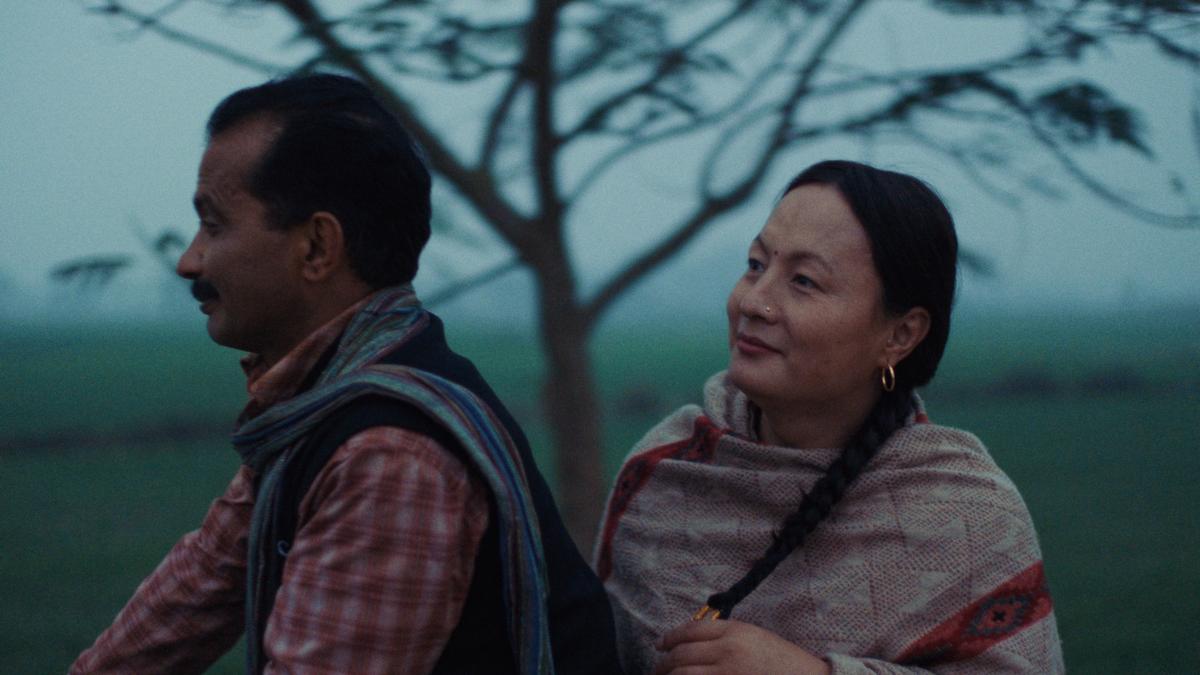

Things were a lot queerer than usual at the recently concluded Cannes film festival on the French Rivera. With as many as 22 films in multiple competition and sidebar sections, it was a strong year for queer films at Cannes even though a lack of big Hollywood names — over and above a few — prompted major media outlets to call it a ‘muted’ year. Muted it maybe in terms of Hollywood star power but Cannes this year more than made it up with a strong expression of queer solidarity. Films with unambiguously queer themes or subplots, dominated the competition section.
This year’s Palme d’Or winner Fjord by the Romanian director Cristian Mungiu featured a teen queer subplot. The shared Best Director award went to the queer couple duo Javier Ambrossi and Javier Calvo for the Spanish film La Bola Negra (The Black Ball), a sweeping resistance drama with multiple storylines switching between the Spanish Civil War and the present. For their portrayal of queer soldiers in the Lukas Dhont directed war drama Coward, Emmanuel Macchia and Valentin Campagne jointly won the best actor award. “There is so much queer art being made and celebrated, it’s amazing,” said Jane Schoenbrun, writer, director and winner of the Queer Palm for their film Teenage Sex and Death at Camp Miasmain their acceptance speech. “Queerness is politics - it means not accepting the world that you are told you must exist within and living as if there’s a possibility to build something better more magical and more truthful. I can’t wait to make more really gay movies,” they added.
Schoenbrun said that it has been an astounding year for the festival due to the sheer number of films from queer filmmakers. “It is notable - and more powerful - that so many films competing across multiple sections are doing so at a time when queer and trans rights are under vicious attack around the world,” says Akashdeep Singh (Akash Saran), a filmmaker and programmer from Oakland, CA who was at the festival. According to Akash, it’s even more pertinent because the attacks forcefully exclude them from cultural spaces. “Queer and trans people are actively being silenced and pressured to delegate themselves back into the shadows,” he says. What is even more notable is that in most films selected this year gay, lesbian and bisexual characters have appeared as a natural part of the storytelling rather than as exceptions or symbolic gestures. “In many of the films, love, desire, and sex between people of the same gender are depicted with a matter-of-factness that would have been striking just a few years ago. And in most of them, the characters are allowed to live, whereas it was previously a common trope for them to meet a tragic end,” says Claus Christensen, chief editor of the Danish film magazine, Ekko.
According to Christensen what feels like a significant step forward is the fact that while coming-out narratives and stories of shame and repression still exist, increasingly sexual orientation is portrayed simply as part of the characters’ lives and identities – not necessarily the central conflict of the film. “At the same time, these are not niche films. Titles such as Coward, Club Kid, Tangles, and Teenage Sex and Death at Camp Miasma are among the festival’s most talked-about and hyped works, clearly speaking to a younger generation. Alongside them are notable films such as Garange, A Woman’s Life, La Gradiva, and many more. The Black Ball is a film about the tragic repression of sexuality, but it unfolds on a dizzyingly epic scale rarely seen,” he adds.
The roster of queer films and their successes this year might make the world’s foremost film festival Cannes seem progressive. But the festival is not necessarily representative of the reality outside the cinema halls. As Christensen states, the Danish Eurovision entrant Søren Torpegaard Lund has received homophobic abuse on social media — even in a country otherwise considered one of the world’s most liberal and tolerant. “Precisely for that reason, queer films at Cannes may have real impact if they manage to reach a wider audience,” Christensen says. Akash, the filmmaker, agrees: “Without queer and trans people there is no art and as long as we have a camera, we will never be silent.”