
Football
How ‘Open Haiti’ hashtag became rallying cry for soccer, diaspora
miamiherald.com
•5 June 2026, 10:00 PM
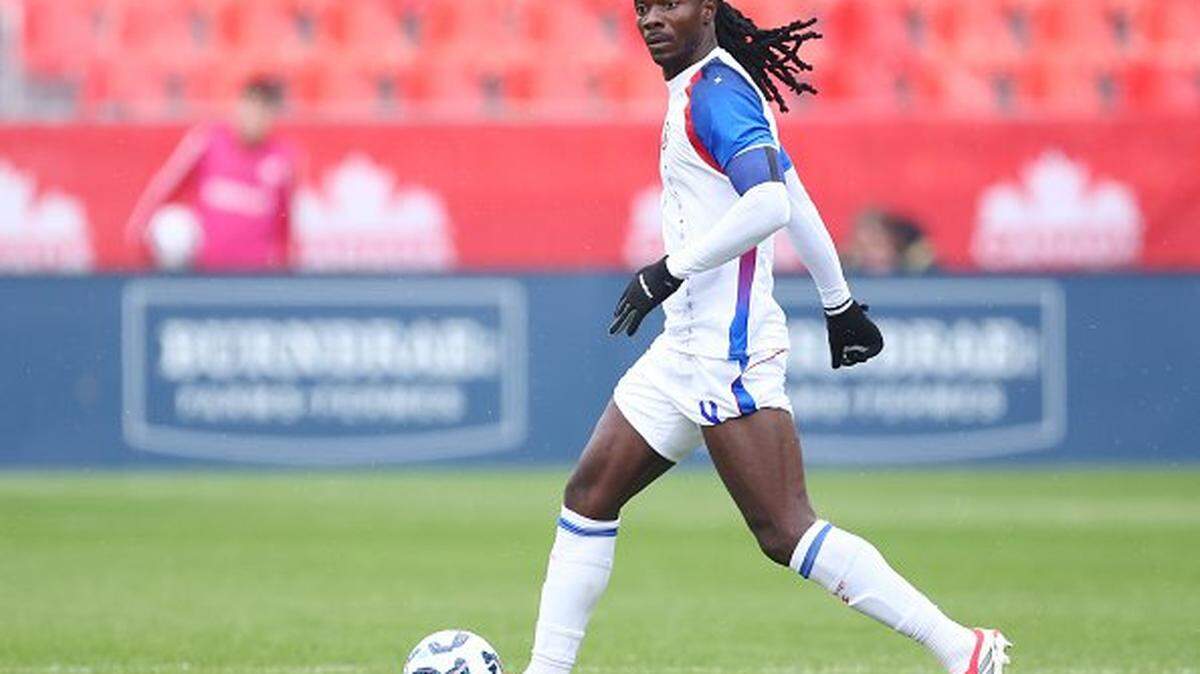

When Haiti’s Les Grenadiers qualified for the country’s first FIFA World Cup in more than half a century, national team co-captain and center-back Ricardo Adé didn’t just limit his celebration to the field. As he and his teammates headed back to their hotel in Curaçao after defeating Nicaragua in a World Cup home qualifier played 500 miles away from Port-au-Prince, the footballer opened X, formerly Twitter, and typed a phrase that would immediately gain traction: #OuvèPeyiA. Open the country. “I launched the movement #OuvèPeyiA because there are a lot of young people in the future who want to become an Adé, a Nazon, a Placide,” the defender said, referring to fellow Haitian national team players Duckens Nazon and Johnny Placide. More than a hashtag, the phrase has become a rallying cry, capturing not just the sentiments of the Saint-Marc born Adé and his Haiti national teammates, but the frustrations of Haitians at home and abroad over their country’s ongoing isolation due to escalating gang violence and political turmoil.
The crisis has led to an ongoing ban on commercial flights into Port-au-Prince from the United States, Canada and Europe, and forced members of the national team — including many whom dream of representing Haiti on Haitian soil — into a sort of exile, blocked from playing before fans in their homeland. “The diaspora heard it immediately and amplified it,” Samuel Dameus, a filmmaker and founder of Faces of Haiti, a platform that promotes positive stories about the country, said about the #OuvèPeyiA message. Unlike a demand from politicians or nongovernmental organizations, Dameus said Adé and his teammates’ ask hit differently because it came from “the men who had just given Haiti its biggest sporting moment in 52 years, turning to the gangs and the government with the same breath.” “Social media didn’t just react, it transformed that phrase into a demand,” he added. “A hashtag became a mirror. The World Cup gave the players a platform larger than any press conference, and they used it to say what millions of Haitians have been living with every day: give us our country back.” Visit to Haiti never happened Few of the players on the Haiti squad were actually born in Haiti, meaning that the majority have been forced to carry the nation’s hopes without having ever set foot in the country.
Officials with the Haitian Football Federation had hoped to fly the team to Cap-Haïtien, where players could draw inspiration from the Citadelle Henry, the 18th century mountaintop fortress built after independence by their formerly enslaved ancestors to guard against a possible French return — or Vertières, the sacred memorial park. The site, a few miles north of the city center, hosts a monument commemorating the Nov. 18, 1803 Battle of Vertières, the decisive battle that capped the 13-year struggle against French colonial rule and led to the birth Haiti as the world’s first Black republic. Neither visit, however, happened. Instead, the team will have to head into the World Cup drawing strength, not from the physical connection of touching Haitian soil, but the emotion bond they feel when hearing “La Dessalinienne,” the national anthem and shouts of “Grenadye Alaso!” — “Soldiers Charge,” — after every goal.
Being able to have visits Haiti ahead of the tournament, Adé said, would have been “a beautiful thing.” As a footballer born in the country, he understands what this moment of being able to play on soccer’s biggest stage, represents. “I had a dream to play abroad and to represent my country at the World Cup,” Adé said in Haitian Creole ahead of Haiti’s warmup match against Peru on Friday at Inter Miami‘s Nu Stadium in Miami. Though his own journey wasn’t easy, he found a way out, “which is I am here today,” he added. “Open the country,” he said, is a message “for those left behind, for the young people who still have dreams. Given the way the country is moving right now, I feel like those dreams are being wasted.” Haiti Fan fever Haiti qualified by playing all of its qualifiers away from home in Curaçao, the only other Caribbean nation to qualify for the 48-country tournament. After Tuesday’s thrashing of New Zealand, Haiti coach Sébastien Migné commented that it was good to play “at home,” an acknowledgement of the support they received from the Haitian diaspora crowd of 16,000 who packed Fort Lauderdale’s Chase Stadium clad in blue-and-red to root the team on.
Their first time to play before such a large, exuberant “home” crowd, the Haiti team’s game was described by New Zealand’s coach Darren Bazeley as “ruthless.” In Miami, they are expected to play before an even more zealous, Haitian crowd in a larger stadium, in a city considered the heartbeat of the Haitian community in the U.S. “My players deserve to play in a full stadium with a lot of fans,” Migné said. “It will be the first victory.” “Maybe with a lot of Haitians and poquito de Peruvianus,” he added with a smile, turning to Adé, who is fluent in Spanish, for the correct phrasing. “It will be a good atmosphere.” From Saint-Marc to Thailand to Miami to Ecuador Born and raised in Saint-Marc, a port city now grappling with escalating gang violence, Adé plays center back for LDU Quito in Ecuador. But reaching the South America nation to become a standout defender, was not a straightforward line. His career path took him from Haiti, where he represented the country in his early 20s in the Gold Cup, to Thailand where he found himself struggling, then to Miami. In Miami, he got his break while playing with a Sunday league, Marugus.
Built around the Haitian community, the club enabled him to connect with Miami United, bringing him one step closer to his World Cup dreams, the same dream he wants the youth back home to have and to be able to realize. For now, however, his focus is on preparing himself and his teammates for the country’s first FIFA World Cup match since Haiti played in 1974 and Miami carries a special significance along that goal. The city not only helped launch his professional career but is also home to one of the largest and most vibrant Haitian communities in the U.S. And with Friday’s match sold out, the game is expected to be the largest Haitian crowd he national team will play before since it was effectively displaced from Stade Sylvio Cator in Port-au-Prince in 2021 because of terrorizing gangs. “The player feel the positive energy behind them,” Adé said. “They see the beautiful messages the fans are sending.” “We want to keep our feet on the ground,” he added. “We want to stay focus on our preparation because we know where we are headed — the World Cup.” The team is talented, he said.
But that’s not what solely defines them. “What we have is unity,” said Adé. It will be needed in order for the team to go beyond its first three games, starting with World Cup opener on June 13 against Scotland in Boston before facing Brazil on June 19 in Philadelphia and concluding group play on June 24 against Morocco in Atlanta. “The guys know what this represents, they know the sadness that exists in the country, and they know that football is the only way to put a smile on the people’s faces,” he said.
While the moment indeed, feels good, he wants for the young people of his country to know they too can be playing in soccer’s biggest tournament one day. “We cannot kill their dreams,” Adé said.