
Economy
I Was Devastated to Learn I Was Having a Baby Boy. I’m Far From Alone.
slate.com
•24 May 2026, 10:00 AM
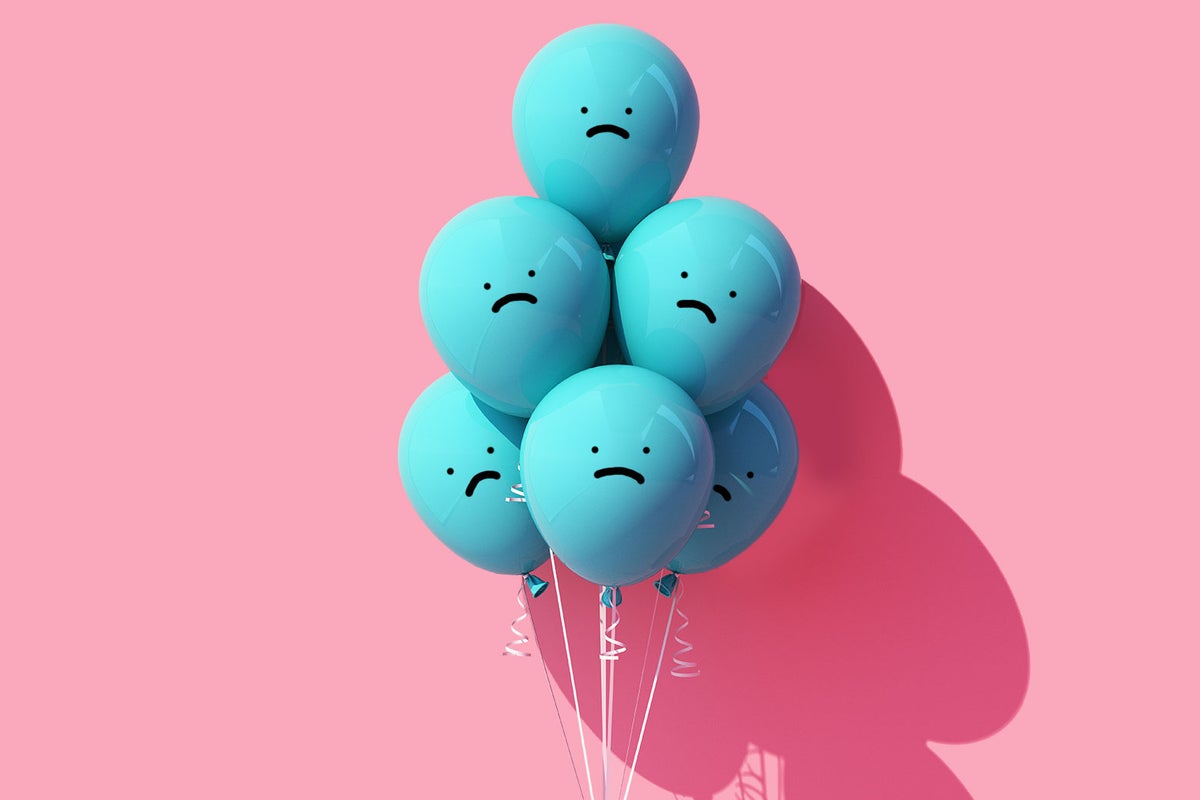

Sign up for the Slatest to get the most insightful analysis, criticism, and advice out there, delivered to your inbox daily. “What do you think it is?” my doctor asked me on the phone. He was calling to reveal the sex of my baby, which expectant parents can find out these days via a blood test about 10 weeks into pregnancy. Call it a mother’s intuition or a penchant for pessimism, but I already knew. “A boy,” I replied stoically, resigned to my fate. I could feel it in my bones, or, more aptly, in my uterus.
And now science had confirmed it: The thing I had long feared was coming true. As someone who was ambivalent about having kids, I never connected with the All I want is for them to be healthy sentiment. I wanted more than that if I was going to upend my life and devote it to another being. When I was a teenager, I would joke that if I had a boy, I would give him away, which is the kind of bit that really lands with the right crowd and is incredibly off-putting to everyone else.
After my older sister started having kids, I watched as everything worked out perfectly for her. She had two beautiful daughters, replicating the makeup of our family growing up, in which my father was outnumbered and all our vacations included a good amount of shopping. I was from a girl family. I wanted to keep that streak alive.
Historically, my preference would have been out of step: A 1978 survey by the Population Reference Bureau found that women were far more likely to prefer having a boy “to carry on the family name and to provide a companion for the husband.” It’s only in recent years that there seems to be a flip in gender preference. Now fertility clinics see an influx of parents-to-be making sure they are guaranteed a girl through in vitro fertilization.
Last year, the Economist ran a cover story illustrated with a pink balloon that read, “Phew, It’s a Girl!” The story explains that Americans will pay more to adopt a girl than a boy, and are likelier to keep trying for additional kids if their first is a boy (a signal that some would really, really like a daughter). The anti-male bias conservatives are always shouting about might be a figment of their imagination in the workforce, but it does seem to exist in utero. When I initially shared my gender disappointment on my YouTube channel last year, I was hit with a barrage of criticism for assuming I knew what gender my child would ultimately identify with. Many viewers were also angry that I was assigning so much meaning to gender, when it is a social construct.
Didn’t I see that it was a betrayal of my progressive values to imply that his nursery couldn’t be pink? Colors have nothing to do with sex assigned at birth, you idiot! As I read the comments, I felt a rush of shame and even debated taking the video down. I didn’t want to contribute to the problem of male alienation or further cement harmful gender stereotypes.
After years of sharing my emotions on the internet, including the ones that don’t paint me in a positive light, I wondered if I had finally gone too far. Maybe this was something so ugly I needed to keep it to myself.
But instead, I kept reading and saw how many other parents related to what I was going through. “I had it in my head I wanted a girl,” one wrote. “I felt the same when we had a little baby boy in the family for the first time,” another shared—and on and on. For this piece, I talked to even more parents who had experienced gender disappointment. Laura Kinson-Evans, who is 36, sobbed when she found out she was going to have a son. So did 42-year-old Sarah Quinn.
I still had months of pregnancy left after getting the results of that blood test, which allowed me a lot of time to stew. Whenever a well-meaning acquaintance or stranger asked whether I was having a boy or a girl, I didn’t even try to hide my displeasure: “A boy. Ugh.” Then I gave birth, and mercifully, those feelings got pushed to the side to make room for unconditional love and an insatiable need to kiss his little head. It turns out that my gender disappointment didn’t have anything to do with the baby in question.
My baby is wonderful. All babies are wonderful. It’s us parents who have shit to work through. If you are not a parent who has experienced the peculiar, nagging ache of gender disappointment, you might be confused by my seemingly overblown reaction to having a son.
What’s the big deal? Shouldn’t expectant parents be happy with whatever child they are lucky enough to raise? Some of you might even be wondering if I’m fit to be a mother with a bias this strong. Thankfully, I am not here to convince you of my capabilities as a mom.
That is something only my son gets to weigh in on—once he’s old enough to evaluate me. (As of this writing, he is still just 5 months old.) But I do want to offer a window into why so many of us have had to confront these uncomfortable feelings. Although everyone I interviewed for this article had their own journey with gender disappointment, there were certain themes that kept popping up. Multiple moms lamented that boy clothes are not as fun, and neither are boy names—two opinions I very much agree with. I feel annoyed that button-down shirts rather than adorable dresses will mark special occasions, and I would have preferred for his nursery to be filled with pinks and purples.
But these superficial concerns are easier to work through. For example, I now buy a lot of gender-neutral animal prints. What is more complicated to carry is the fear I heard echoed in almost every conversation: I don’t know what to do with a boy. “This baby is going to have a penis,” said 32-year-old Anna, who was in her second trimester when we talked. “That feels so—even though I’m married and have a husband, it just feels so, like, alien, almost.” (I’m identifying some of the parents and parents-to-be by first name only to protect their privacy.) The anxiety that your child will be confoundingly different from you extends far beyond physical attributes (although the concept of male puberty was another source of anatomical concern). As 34-year-old Rana Othman, the mother of a 13-month-old boy, put it: “I know how to navigate the world as a woman, and my mom taught me that.
I don’t know what it’s like to navigate the world as a man. I have no idea. I truly have no idea.” Sarah identified with this conundrum: “I know how to raise, like, a confident woman who’s not going to take any shit, but I don’t really know how to raise an empathetic man.” Her son is 4, and “on a day-to-day basis, I just see him as the individual,” she said. “But once in a while, something will, like, trigger me, where I’m like, Oh, shit. Like, yes, it’s, like, this giant responsibility that’s, like, sitting on me to cure the problem of, you know, white men.” Talking to these women about their valid concerns made me feel embarrassed about where my worry had fixated.
So much of my gender disappointment revolved around the chaotic scenes I’d witnessed involving young boys, more specifically those in the 2-to-10-year age range. My hormonal brain flashed to visions of a raucous toddler who wouldn’t stop climbing the walls while my best friend’s daughter calmly played with dolls, painfully highlighting our different realities and planting a seed of noxious jealousy. My dread about the frenzied nature of boyhood was only stoked by the people around me. One friend came over when I was pregnant and enumerated the various ways his young son was more difficult to manage than his angelic daughter.
He said this all so casually, as though he didn’t realize he was confirming my worst fears. But my concern that little boys are terrors is less of an alarming potential problem than what Sarah and others were alluding to. I was so busy worrying that my rambunctious son would never want to read quietly in a corner that I hadn’t fully faced the possibility of him getting sucked into the manosphere. The stakes of raising your son wrong in this world are intimidatingly high.
I doubt that the importance of consent would have come up as much if I were researching an article about parents who wanted a son but had a daughter. If you don’t successfully teach your son to respect women, your child runs the risk of being not just a disappointment to his family but a danger to society. In the age of Andrew Tate and endless scrolling, you can’t prevent exposure to harmful ideas. Unless we lock our sons in a room without an internet connection, they are sure to encounter misogynistic, racist messaging disguised as male empowerment on a daily basis.
As their parents, we must figure out how to counter this perspective with an even more compelling narrative—one in which feminism and empathy aren’t dirty words but a way of life. When I put out a call on my social media for parents to share their experiences with gender disappointment, I got an influx of DMs from mothers. It took more work to find fathers who were disappointed, at least initially, to be having a son, but they do exist, and I talked to two of them for this piece. Cameron, who is 30, told me that although he had initially wanted a daughter, he wasn’t particularly worried about raising a boy.
He acknowledged the possibility that his son might do “something really bad” but doesn’t feel he can control whether that happens. What he can do is love his son and make sure he has “positive people around.” Cameron’s insistence on not being personally responsible for his son’s hypothetical future actions was a stark contrast to how some of the mothers felt. Many of them are plagued, I’d argue unfairly, by a strong sense of accountability over their sons’ future behavior. Cassie Wood-Triplett, who is 34 and the mother of a 6-year-old boy, told me that she often wonders, “How do I make it so that he has empathy and grows up to not be a terrible man, because there are so many terrible men?” I don’t think Cameron is naive or detached from his role as a father. (Although I do believe that on a societal level, men aren’t held anywhere near as responsible for the outcome of their children as mothers are, so it is a less obvious thing for them to fixate on.) My theory is that his ability to more easily differentiate is a product of his lived experience as a man.
He knows it’s possible for boys to grow up to respect women and care about other people, because he has done it. Shaping his son’s character doesn’t feel like a ticking bomb that needs to be dismantled before it explodes, because he has a user manual. He knows how to shut it off—or at least has a pretty good idea of the wiring. Mothers don’t have that lived experience.
What we are more likely to have is a collection of harmful experiences with horrible men. That said, wariness of unchecked masculinity isn’t limited to women. Kamran Eshtehardi, a California-based therapist who works primarily with teens and young adults, told me animatedly over Zoom that growing up, he rebelled against his father’s patriarchal worldview. As a teen, he leaned into his feminine side and felt a kinship with his mother and sister.
As a parent, he wanted to wear matching tutus with a girl, not try to teach a boy to be a man, all while avoiding channeling his authoritarian dad or trying to push his own sense of self too aggressively. “I knew I was going to do a little bit of projecting onto my son, like I was going to sort of, like, see him as a little mini-me,” he explained. Kamran initially felt ill-equipped to shape his son’s idea of masculinity. And if a professional like Kamran feels that way, what hope is there for the rest of us? Maybe the kind of hope I’m seeking requires a perspective shift—a shift that I saw already happening in some of the more experienced boy moms I interviewed.
For all her worry about terrible men, Cassie didn’t feel the same gender disappointment when she found out she was having another boy. She shared, “I actually had this thought of Maybe I’m a good person to be raising these boys.” In other words, moms who are actively worried about raising kind, empathic boys are also likely to be mindful about how they raise them.
Although there is no foolproof method of rendering your son immune to the manosphere, modeling certain behaviors can act as a preventive measure—like making sure they routinely see men perform domestic labor, and always talking about others with respect. More than one mom I spoke with even mentioned the importance of teaching their sons about periods so they understand what women have to go through and don’t view menstrual blood as icky.
Yet another element of raising a boy I hadn’t thought of, because I was too busy worrying about monster trucks. Though, to be honest, some of my fears about having a son were darker than what anyone else mentioned. One of my biggest concerns when I was pregnant was that, unlike a daughter, my son wouldn’t be able to carry me naked to the shower after I inevitably lost control of my body in old age, because moms can’t be naked in front of their adult sons. If this feels like a bizarre and strangely specific fear—it sure was.
But it came from my recent experience of repeatedly carrying my own mom naked into the shower before she died of a rare prion disease in September 2024. The terminal disease came on rapidly. One month she was fine other than a rogue, uncontrollable arm; the next, she couldn’t walk or talk. For the six weeks before she passed, I was her primary caregiver, which involved a level of bodily intimacy I couldn’t fathom having with a parent of the opposite sex.
Would I have been able to physically show up for my father in the same way if the proteins in his body had decided to sporadically fold the way my mother’s had? Perhaps, but it seems less likely. We had long been a home of closed doors and embarrassed apologies when someone was getting dressed, after all. Maybe some people would have stopped trying to conceive in the wake of their mother’s sudden death.
But I was already in my mid-30s and aware that I was creeping closer to maybe not the end of my fertility, but the end of a more certain, less complicated window in which to try to conceive. I also don’t need a Freudian analyst to tell me that part of my desire to become a mother was fueled by an unhealthy ache to re-create the maternal bond I had just lost. I was aware of this during the six months it took to get pregnant. If I had wanted a girl before, I needed a girl now.
I didn’t know how to exist without being one part of a mother-daughter relationship. I was willing to switch roles so long as I could keep the dynamic alive. My husband, John, and I had decided to start trying for a baby less than a week before my mom was admitted to the hospital for the first time that summer. At that point, we had no idea what was going on with her, which was how I found myself on a Zoom conference call from the hospital’s waiting room with John and my psychiatrist because she refused to reschedule without charging me the full fee.
While my mom lay down the hall, we discussed changing my medication to something more pregnancy-safe to get my body ready to conceive. A few weeks later, I had a call with my OB-GYN’s office while my mother, who was now in a wheelchair and struggling to talk, met with her own psychiatrist to process her impending death. As I paced the halls, the nurse explained what the facility offered in terms of prenatal care and that I would have to pay extra if I wanted my doctor’s direct cellphone number. I’d say something here about the poetic, circular nature of life, but I would be forcing it.
Those moments that work so well in bittersweet movies are horrible to experience in real life. It would be hard to overstate how close I was to my mom. My obsession with her was so strong it became a part of my brand as a YouTuber turned podcaster turned author. If anything significant, funny, or even mildly interesting happened, I was known to declare to John, “Let’s call my mommy.” She was my favorite person.
I had been a kid with severe OCD and negligible social skills, so my parents played a larger-than-average role in my life. They were the ones who were always there, laughing at my jokes and making sure I went to therapy when my peers rejected me and my own mind became terrifying. I’ve often suspected that without their specific, supercharged form of support, I wouldn’t still be alive. Providing this type of support to my own daughter one day was something I always imagined that parenting would entail.
It gave me a sense of purpose. If I had a daughter, what would start as a straightforward maternal love could blossom into a deep friendship, richer than any other relationship because of its many layers and shared history. Having experienced that unique transition with my own mom after I became an adult, I knew how rewarding it could be for your mother to become your best friend. I was greedy for it to happen again.
So much of the appeal of motherhood was being able to serve the same role for my child that my mother had for me. To carry on her legacy of love and kindness.
But is that type of connection even possible between an adult man and his mother? It’s this concern that’s been harder to shake than all my other (mostly irrational) ones. My fear that there is a limitation to the level of relationship a mom can have with her grown son makes sense given our current culture.
While moms who have close relationships with their adult daughters are seen as successful, moms who have close relationships with their adult sons are often seen as overbearing or the worst type of mother-in-law. Sarah got straight to the point when she said, “If you’re super close to your son as a mother, it’s, like, weirdly sexualized.” Think about the difference in public perception between Buster Bluth and Rory Gilmore, two fictional characters well known for loving their mommies. This misconception isn’t helped by all the “boy mom” content on social media, in which women with toddlers are already voicing disgust toward their sons’ future partners, viewing them as some sort of threat. There is an unstated but agreed-upon belief in Western society that an adult man who calls their mom as much as I called mine didn’t properly differentiate, that their continued connection to their mother is a weakness—not a source of strength.
Of course, there is no real reason men can’t be close to their moms. But when you see few examples of this in your personal life, it can be hard to imagine it for yourself. Even if you and your little one are currently joined at the hip, you can envision a future when they call only because their dutiful wife reminds them to. No one dreams of being relegated to the nagging, dreaded mother-in-law.
It became clear to me during my research that our tendency to fantasize about the future is a huge contributor to gender disappointment. So much of the grief expecting parents feel isn’t tied to having to love and raise a son. It is attached to the loss of a future with a daughter. When you are pregnant, it can feel as if two paths have opened up before you; once you find out your baby’s sex, one of those paths is permanently closed off.
As someone who has decided to have only one child, I will never get to walk down the path of having a daughter. All my daughter-specific fantasies will have to remain just that. I have no choice but to put them away, along with all the other versions of my life that haven’t come to pass.
But I’ve come to realize that having a daughter isn’t a guarantee that I would live out those fantasies. My hypothetical daughter might have hated getting her hair French braided, even though it is one of my few fine motor skills. Our children are not playthings we get to customize to our preferences. They are individuals.
As psychologist Robin Gibbs pointed out to me, there are plenty of ways to experience gender disappointment even if your child is the sex you had hoped for. The daughter you always wanted might be “too girly or not girly enough.” And of course, if you have a boy, your child still might end up being girly, or even not identifying with their sex assigned at birth at all.
Even so, the result of a blood test can, as it did in my case, topple over a whole host of expectations and dreams—and any variation from them can be a source of pain. That is the uncomfortable reality of trying to parent as flawed human beings. Your child not turning out to be who you envisioned might start with learning their sex, because it is a baby’s first defining feature, but it certainly doesn’t end there. It is a lifelong experience to give up the idea you had in your head for the reality of the person in front of you. “It’s not about the kid—like, the kid is great,” said Gibbs. “It’s about us, right?
It’s our work in working through whatever is getting stirred up in us.” Experiencing such strong gender disappointment wasn’t a shock for me. I had known what was coming if that blood test came back male.
But for quite a few of the mothers I talked to, their tests took them by surprise. Before getting pregnant, they viewed gender as a construct and therefore not something worth caring about. Jessica Davidson, who is 34, confessed, “I thought I would be immune to gender disappointment. And wow, that is not true at all.” After trying for five years to conceive and going through a traumatic miscarriage, Jessica Bryant was “fully convinced” she would care only about the health of her baby.
When she found out she was having a boy, she was too “shocked to feel disappointed” and “had to kind of sit with that and think about where that was coming from and why.” Having an emotional response that is unaligned with your values or experience adds another layer of discomfort to an already loaded situation. I didn’t need judgmental YouTube comments to make me feel guilty about experiencing gender disappointment. I can promise you that no one wants to feel disappointed by their baby. It is not a good feeling.
But acknowledging this shameful feeling, rather than shoving it down, allowed others to offer me useful perspectives. Amid the dissenters, there were heaps of encouragement and advice on my YouTube video, including: “I find it’s helpful to think about different men I admire and how I would love to have known them as a little kid.” This touched on one of my most effective strategies for living with my gender disappointment: remembering that the closest relationship in my life is with my husband, who happens to be male. Other commenters took the time to normalize my unease, writing things like: “There is no correct way to enter motherhood … and whatever you are feeling is normal. And it hopefully eases once you get to know your little guy.” It’s true that for all the parents I interviewed, their gender disappointment alleviated once their sons were born.
You can’t struggle to imagine something that is already happening. But certain fears, like what kind of man your boy will grow into, remain. I suspect, though, that gender-specific worries start to get folded into the litany of other concerns that come with parenthood. If our partners are a mirror reflecting ourselves back at us, our children are like advanced brain imaging, revealing not just our current self but all our hopes and hurts.
It can be too much to look at if we don’t pay it the right kind of attention. As such, you are never done with the work of managing child-prompted disappointment or envy-inducing comparison.
But we can, and probably should, get better at living alongside it. Since going public about my experience, I’ve learned, for the umpteenth time in my career, that sharing my individual story helps build the stories we tell as a community. I want to live in a community where it is OK to have conflicted emotions, where those emotions mean not that you will be a bad parent but that you’re a person being confronted with a life you never envisioned and aren’t sure how to navigate. The one person I do not need to share this story with, though, is my son.
My gender disappointment is mine to continue to work through, not his burden to bear. I spent my entire pregnancy sitting with my grief about the gender of my child. I didn’t push it away. Instead, I waited it out.
I waited to see how it would feel once the baby in my belly was no longer a concept but a person. I told myself that if I were still unable to connect with him, I would simply fake it. I would be the mom he needed me to be, regardless of how I felt. And I will continue with that approach no matter what his childhood brings up for me, because I am sure there are more disappointments—or, really, just deviations from my expectations—to come.
I hope my son will grow up knowing that his job isn’t to fulfil my idea of who my child should be. His job is to be himself while I loudly cheer him on. And thankfully, now that he is here, he is not some alien boy I have to pretend to care about. He is my little baby, whom I love very much.