
Crime & Investigation
Jakarta deploys troops against muggers, stirring dark memories
scmp.com
•1 June 2026, 4:01 AM
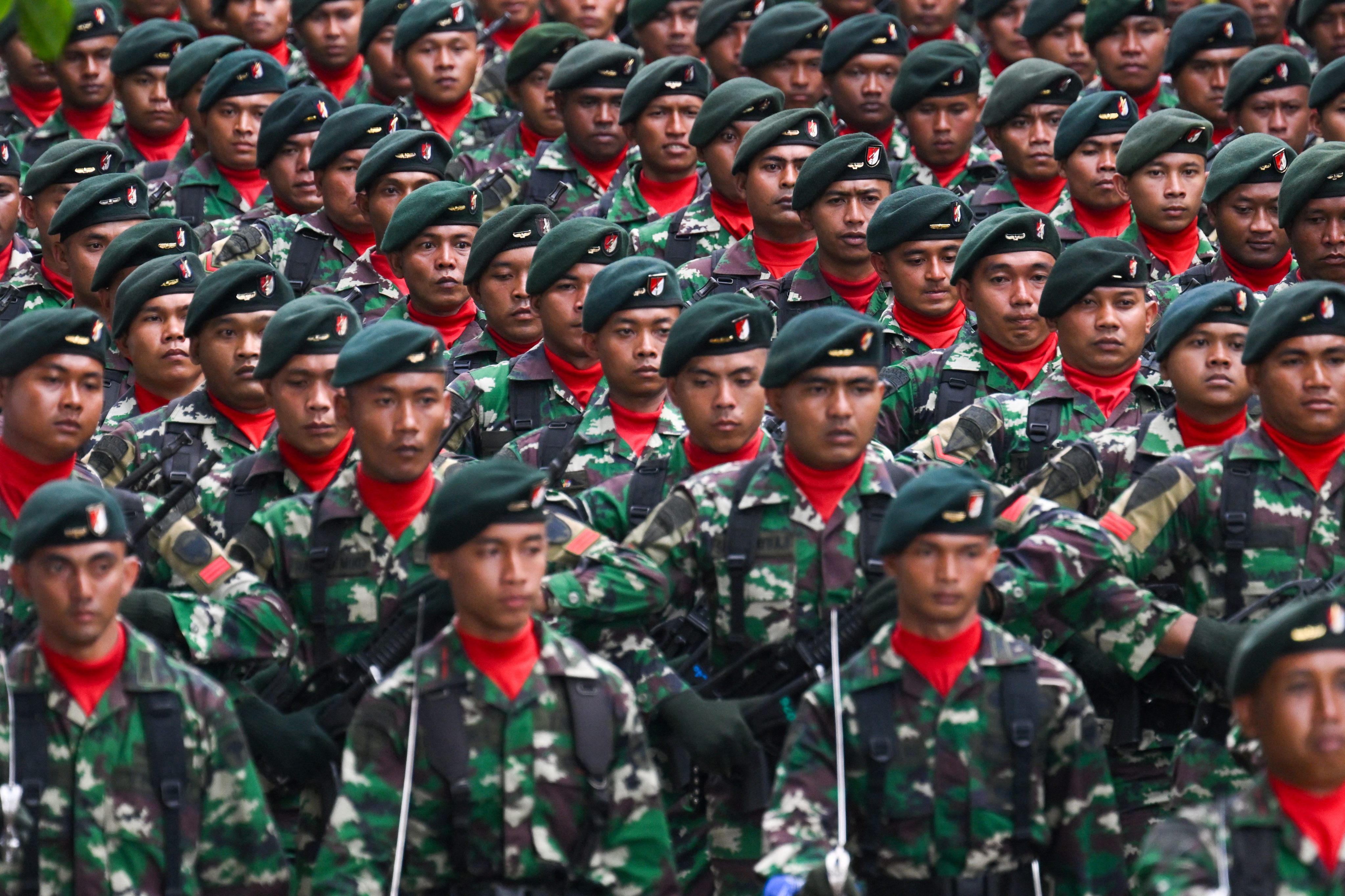

Jakarta residents have largely welcomed a new police-military campaign against violent street crime, after a wave of brazen motorbike muggings struck fear into Indonesia’s capital. But rights advocates warn that deploying soldiers alongside police blurs a line between law enforcement and military power, reviving memories of extrajudicial killings in a country still haunted by its authoritarian past. On May 15, Jakarta police announced the formation of a special, 24-hour joint patrol task force aimed at eradicating street robbers known as begal: a term commonly used for violent muggings, often carried out by motorbike-riding offenders. The Begal Hunter Team, backed by the Jakarta Military Command (Kodam Jaya), had arrested 173 suspected offenders as of May 22, police said.
Jakarta police received 1,283 reports of street crime from May 1 to 22, with aggravated theft accounting for 651 cases, according to Police Grand Commissioner Iman Imanuddin, director of general crimes investigation at the Jakarta Metropolitan Police. Iman said police were collaborating with the Indonesian Armed Forces (TNI), local governments, district and sector police, as well as “social media activists”, to reduce crime in the capital. He identified West Jakarta as the area most prone to begal, citing its “fairly heterogeneous population”. Iman added that several suspects were shot in the legs for resisting arrest or trying to escape, including two recently detained in West Jakarta who allegedly carried out 190 robberies between December and May.
A number of lawmakers have voiced support for tougher action against street robbers, with some calling for officers to shoot suspected offenders on sight. “This is a very good step because it ensures a sense of security and comfort for citizens everywhere. Therefore, all regional police must respond decisively to begal, namely by shooting them on sight,” lawmaker Ahmad Sahroni told reporters on May 18, as quoted by CNN Indonesia. Lieutenant Colonel Noor Iskak, Kodam Jaya spokesman, said he hoped the military’s presence would “provide a sense of security and [show] the state’s presence in protecting society”. Defence Minister Sjafrie Sjamsoeddin said helping police with the begal crackdown fell within the military’s remit.
He said the ministry planned to establish 750 battalions called Territorial Infantry Development units over the next five years, each comprising up to 1,190 soldiers. “After we built a military base in a district [for the battalion] and the base was used for soldier training, the number of muggings there decreased by … more than 50 per cent,” Sjafrie told lawmakers on May 19. Jakarta police have struggled to quell street crimes for years. In 2020, they formed a similar task force to hunt down begal targeting cyclists, at a time when cycling had become more popular among the capital’s upper-middle class. Mixed response For some residents, the crackdown has brought both reassurance and unease, reflecting the difficult balance between demands for public safety and concerns over the military’s role in civilian life. “If this effort is carried out properly and seriously, I am quite grateful, hopefully there will be no more street crimes, especially if it concerns the lives of innocent people,” said Vitalia Jakarapatr, a West Jakarta resident.
The 24-year-old said she noticed a rise in begal crimes in her neighbourhood after a friend was robbed of her mobile phone. Vitalia recounted how two men mugged her friend around 10pm last week while she was heading home from work. “They drove their motorbike closely to her and immediately snatched her mobile phone. She tried to pull her phone back, but one of the two men took out a small knife, so she let go of her phone,” said Vitalia, a sales administration employee. “I am worried about myself too because I go to work every day by public transport and get off on that street, and I’m scared. I just try to be as careful as possible on the street.” Vitalia said she “does not mind” the increased military presence on the streets, though she also felt “uncomfortable and afraid of something untoward happening”.
I’m scared. I just try to be as careful as possible Vitalia Jakarapatr, West Jakarta resident Fadhil Alfathan, director at the Jakarta Legal Aid Institute, said the military’s involvement carried “an ominous tone” as it brought back memories of mysterious shootings in the 1980s colloquially known as petrus. During Suharto’s authoritarian regime, undercover military personnel killed thousands of suspected thugs and petty criminals, with bodies often left in public places as a deterrent. “It’s perfectly legitimate for police to seriously respond to the rise in muggings.
However, if they resort to methods that prioritise violence and neglect criminal law enforcement, including the involvement of the TNI, this is completely wrong,” Fadhil said. “We are concerned that the widespread public outcry over begal is being exploited for purposes beyond handling such cases, including to justify the TNI’s involvement in domestic security matters. This is not really the TNI’s concern.” The military’s duties must be confined to “threats to the country’s defence from outside”, he added. Researcher Beni Sukadis, however, said he saw “no problem” with the new initiative, citing the 2004 National Armed Forces Law, which allows troops to take part in “military operations other than war” – a category covering non-combat duties such as disaster response, counterterrorism and support for local authorities.
Even so, he called for “clear, rigid rules” and standard operating procedures issued by the military commander-in-chief to “regulate the time limit, the rules of engagement and the accountability mechanism”. “There is still a legal vacuum regarding the rules for involving the TNI for tasks outside its main duties,” said Beni, who is with the Indonesian Institute for Defence and Strategic Studies. He acknowledged that it was “natural” to be concerned about a return of petrus, but doubted that would happen since the military had made its intentions clear. Rico Sirait, a defence ministry spokesman, said last week the military would “prioritise professionalism, coordination with the national police and a humanistic approach in accordance with applicable regulations”.