
International
Marco Rubio India visit: The important opportunities and major challenges for India-US ties in a changing global order
dnaindia.com
•26 May 2026, 4:00 PM

US President Donald Trump, on May 23, said that a deal with Iran had been ‘largely negotiated’. According to the agreement, the Strait of Hormuz would be re-opened. The closure of the Strait has disrupted global energy markets since the West Asia conflict began. Iran’s Fars news contradicted Trump calling them not ‘true’ and inconsistent with reality.
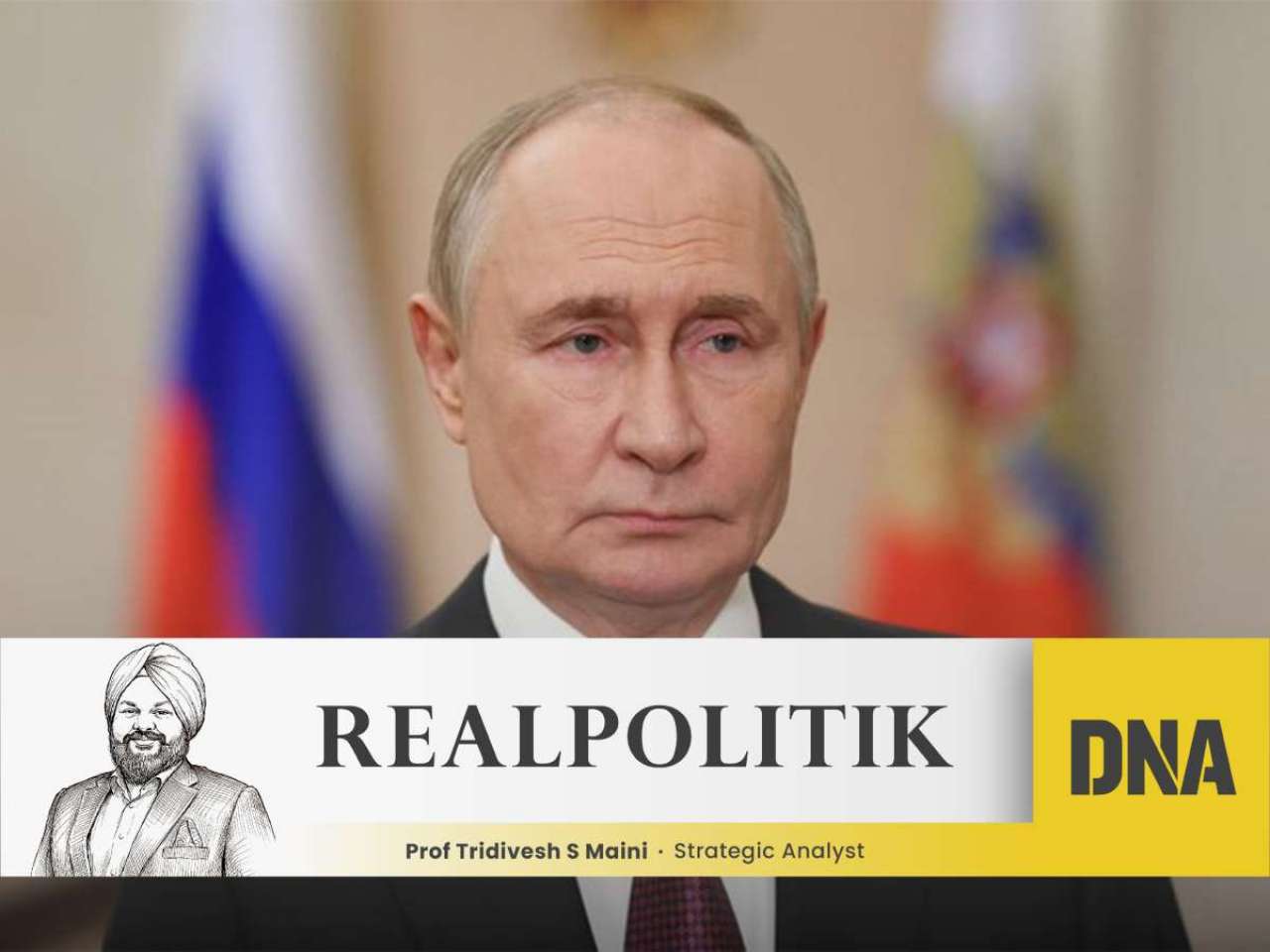
On March 24th, Trump said that the US would not rush into an agreement with Iran. In a post on Truth Social he said: ‘They (Iran) must understand, however, that they cannot develop or procure a nuclear weapon or bomb. I would like to thank, thus far, all of the countries of the Middle East for their support and cooperation.’ Putin’s China visit: The significance Russian President, Vladimir Putin embarked upon a two-day visit to China (May 19-20). Over 40 deals were signed between both sides across several areas including: trade, education, technology and nuclear security.
The most important was a joint declaration which focused on a ‘multipolar world’. Said the declaration: ‘Russia and China are committed to an independent and sovereign foreign policy, are working together in close strategic cooperation and playing an important stabilizing role on the global stage,’ Chinese President, Xi Jinping highlighted the point that: ‘Unilateralism and hegemonism are resurging, yet peace, development and cooperation remain the aspiration of the people and the prevailing trend of our times,’ Both sides noted the fact that bilateral trade had risen. In a joint conference, Putin highlighted the fact that trade was conducted in Yuan and Roubles. This helped in insulating the economic relationship from global economic uncertainty.
PM Modi’s Italy visit During PM Modi’s Italy visit (May 19-20) several important agreements were signed. Both countries upgraded their relationship to a ‘Special Strategic Partnership’. In the economic sphere, both sides set a trade target of Euro 20 billion by 2029. Both countries also sought to enhance industrial collaboration in areas like: semiconductors, clean technology and digital technology.
In the sphere of defence, both sides announced co-development, co-production and defence technology partnerships. Apart from this, it was agreed to launch a naval dialogue and a high level military dialogue between both countries. Both sides also reiterated their commitment to cooperation on the Indian Middle East Europe Corridor (IMEC) Project. In a joint statement, issued after the meeting of PM Modi and Italian PM Giorgia Meloni both sides highlighted the importance of the corridor in promoting global trade and connectivity.
Another important announcement was the setting up of INNOVIT India an innovation hub which seeks to support startup collaboration, research partnerships and university linkages between both countries in artificial intelligence, semiconductors, health care and logistics. The joint statement issued after the meeting of PM Modi and Italian PM Meloni also stated: ‘The two leaders agreed to enhance mobility of students, researchers and skilled workers, particularly in STEM sectors, and to expand cooperation on skills development, in line with the needs of the labour market, including through a specific Joint Declaration of Intent on the facilitation of mobility of nurses from India to Italy’. Marco Rubio’s India visit: Key takeaways US Secretary of State, Marco Rubio landed in India on May 23.
While the highlight of Rubio’s trip is the Quad meeting to be held in New Delhi on May 26. He landed in Kolkata on May 23 and visited Agra and Jaipur (May 25). Before leaving for his trip, Rubio called India a great partner. He referred to the possibility of greater energy cooperation between both countries and the Quad meeting on May 26.
Rubio met with PM Modi on May 23rd and External Affairs Minister, S Jaishankar on May 24th. During his meeting with PM Modi, progress in several areas pertaining to the India-US relationship were discussed and the current situation in West Asia. Rubio is supposed to have extended an invitation to PM Modi, on behalf of US President Donald Trump, to visit the White House in the ‘near future’ according to a post on X by US Ambassador to India Sergio Gor. The US Secretary of State on his part said that President Trump and PM Modi share a close personal rapport.
On May 24, Rubio met with S Jaishankar. Several issues pertaining to trade and strategic relations were discussed including: the situation in West Asia, trade relations, visas and energy supplies.
While addressing a joint press conference, Jaishankar made the point that India and the US had recently renewed their 10-year major defence partnership framework agreement. Rubio described India as an important strategic partner of the US, saying that both countries were ‘strategic allies’.
While responding to queries regarding the changes US is making to J-1, F-1 and H-1B visas, the US Secretary of State highlighted the contribution of Indians to the US economy. He said that the changes being introduced were not India specific, though there would be ‘friction points’ between both countries.
In conclusion, Russian President Vladimir Putin’s visit to China, days after the visit of Donald Trump and the criticism of western ‘hegemonism’ while also issuing a joint declaration which referred to ‘multipolar world’ order was important. PM Modi’s visit to Italy highlights the growing thrust of India on diversifying economic and strategic relationships. In a changing world order, ties between India and Italy are likely to strengthen not just in the economic and strategic sphere, but in several areas including R and D, Tech and higher education. US Secretary of State, Marco Rubio’s visit to India underscores the point that ties between both countries – despite significant convergences – are likely to remain complex.
India’s emphasis on diversifying economic ties, a strong reiteration being FTAs signed recently, and re-orienting its overall foreign policy is important in this context. (Disclaimer: The views expressed above are the author's own and do not reflect those of DNA) (The author is a policy analyst and faculty member at the Jindal School of International Affairs, OP Jindal Global University, Sonipat)