
International
Opinion | Philippines’ bet on shaky investment pledges from the US risks China’s ire
scmp.com
•1 June 2026, 10:00 PM
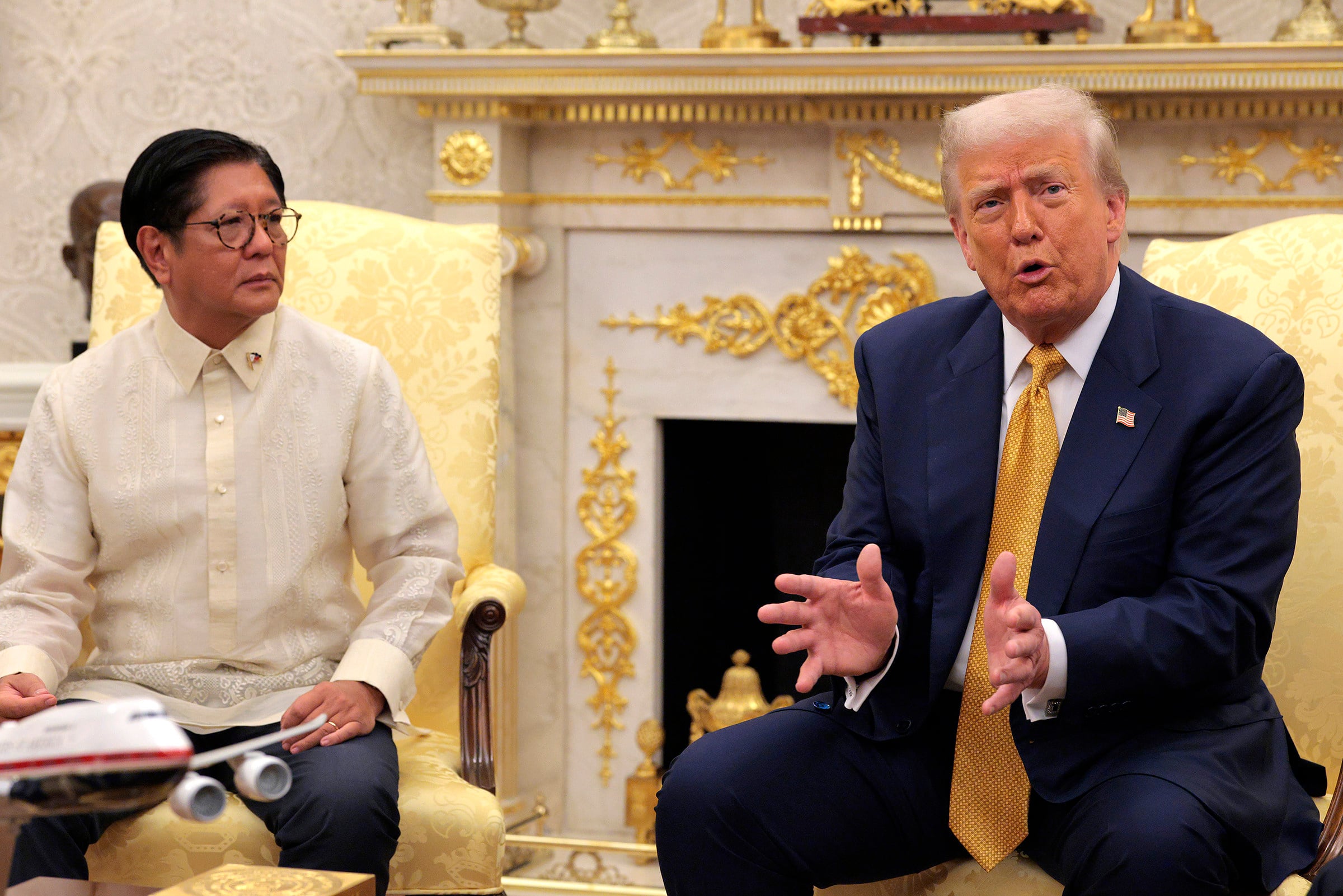

“You have absolutely no idea of what you’re talking about. The whole point of Pax Silica is to partner with countries who are good at doing different things because everyone wins from a secure supply chain,” wrote US Undersecretary of State for Economic Affairs Jacob Helberg on a social media website in response to an online critic of the US strategic initiative with the Philippines. The spirited exchange came after Manila’s reported rejection of a request to extend diplomatic immunity to US personnel overseeing a planned 4,000-acre industrial hub in the Philippines. Under Pax Silica, the Philippines is to emerge as a critical node of a US-led global supply chain, with a focus on cutting-edge industries such as semiconductors and artificial intelligence (AI).
Helberg, having recently visited Southeast Asian capitals including Manila to push Pax Silica, rejects any report of a diplomatic immunity request as “patently untrue”. The episode highlights both Pax Silica’s sensitivities and geopolitical relevance. The initiative is supposed to complement America’s expanding military footprint in Asia, especially in the Philippines. By leveraging access to Manila and with an eye on China, the Trump administration aims to both enhance military interoperability with regional allies via massive drills, such as the Balikatan exercises, and to strengthen economic interdependence with key Asian economies.
America has long undergirded the region’s security architecture by establishing naval dominance across the Indo-Pacific and serving as a primary source of capital and investment. But in recent years, as China began to reclaim its position as Asia’s dominant power, American leaders have struggled to offer a constructive counterstrategy. In his first term, US President Donald Trump torpedoed Washington’s sole effort at countering China’s economic rise in Asia by withdrawing his country from the Trans-Pacific Partnership. He went on to alienate allies with massive tariffs that disrupted transpacific trade linkages.
Thanks to a bipartisan protectionist turn in America, the avowedly multilateralist Biden administration struggled to get even a modest digital trade agreement off the ground. On the military front, however, successive American presidents have expanded the Pentagon’s Indo-Pacific Command fleet and deployments across the Taiwan Strait and South China Sea, struck deals for access to vital military facilities in Asia and deployed state-of-the-art weapons systems across regional bases and in regional exercises. America has thus come under criticism for a military-centred Asia policy which, especially for the Philippines, lacked a robust economic component. Worse, it also brought back age-old worries over American threats to allies’ sovereignty.
This is precisely why, even given the Western-friendly government in Manila, there are sensitivities in the Philippines around issues concerning diplomatic immunity. Crucially, the Philippines is determined to leverage its growing strategic importance to attract high-quality investment. Across Asia, the Philippines should have easily had the closest strategic relationship with Washington. The English-speaking nation served as America’s sole Asian colony for almost half a century, then hosted its largest overseas military bases at the time, which played a vital role in the Korean and Indochina wars.
In recent years, the Philippines has granted expanded US military access to strategically located facilities facing Taiwan and the South China Sea. It hosts the Balikatan military exercises, vital to contingency planning and combat interoperability between Washington and Asian allies, and, controversially, has the US Typhon missile system stationed in northern Luzon despite vehement Chinese criticism.
Yet Philippine exports to the United States are barely a 10th of Vietnam’s while US foreign direct investment in Singapore is over 50 times larger than in the Philippines. There is still no US-Philippine free trade agreement. Worse, Trump’s ill-conceived war against Iran has sparked a massive energy crisis in the Philippines and hit its economic growth. President Ferdinand Marcos Jnr has signalled his displeasure by suggesting a “very serious restructuring” of ties with China, even discussing potential joint development energy deals with Beijing in the disputed South China Sea.
The US is under growing pressure to reassure Asian allies and provide concrete economic projects. Enter Pax Silica, under which New Clark City in the Philippines is expected to attract high-quality investment in manufacturing, minerals processing, logistics and AI-related enterprises. Over US$100 billion in investment is expected over the next decade. Other major infrastructure projects in the Philippines under consideration include the Subic-Clark railway project, Clark International Airport expansion and a Clark national food hub.
Desperate to create growth engines and reverse decades of manufacturing decline, the Philippines is presenting itself as a leading “China-free” producer of critical minerals, especially nickel, in a bid to enter the electric vehicle production network and move up the semiconductor value chain. Pax Silica builds on the Biden-era Luzon Economic Corridor plan, a joint US-Japan initiative to turn the Philippines’ northern industrialised regions into an investment hub. Key US allies such as Canada, Australia, Denmark, France, Italy, South Korea, Sweden and Britain have shown interest.
While the urgency is clear, it remains to be seen how the Philippines can overcome its long-running barriers to foreign investment, including uncompetitive production costs, regulatory uncertainty and poor basic infrastructure. It seems Manila is banking on Washington to corral strategic investments driven by a broader geopolitical calculus, namely building a Philippines-centred regional network to constrain China’s rise. Bogged down by the Iran war and lacking a coherent economic strategy, however, the Trump administration has yet to prove its mettle in forging an effective regional strategy.
In short, Manila runs the risk of antagonising Beijing by betting on partly speculative investment pledges by Western partners, especially the Trump administration.