
Climate
Putin Talks Multipolarity and Shrugs Off Economic Pain at ‘Russian Davos’
themoscowtimes.com
•5 June 2026, 4:01 PM
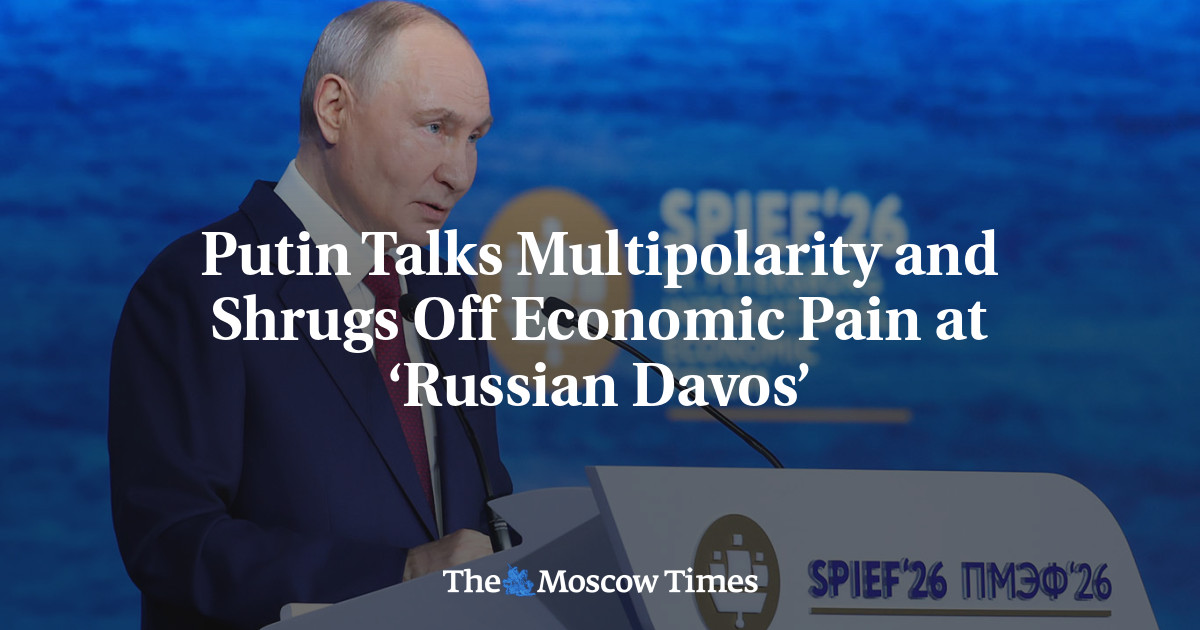

As he did during the past two forums, Putin championed BRICS — a bloc of countries originally comprising Brazil, Russia, India, China and South Africa — as the primary engine of this transition. “BRICS leadership is growing. Projections show that this balance will continue to shift further in favor of BRICS,” the Kremlin leader said. “It’s because economic growth rates in BRICS countries will be consistently higher. They are higher now, and they will go higher still. This trend is here to stay.” At the same time, with years of war and Western sanctions weighing heavily on the Russian economy, Putin could not avoid addressing the country’s mounting macroeconomic vulnerabilities. “We have essentially come down to the same baseline that Eurozone countries have been living with for years,” Putin said. “The crucial thing is that we preserved the core of our macroeconomic policy.
I am confident that our upward and forward progress is guaranteed.” Russia’s economy contracted by 0.5% in annualized terms between January and March, according to the Central Bank. Policymakers now expect GDP to grow by just 0.4% this year, a significant decrease from their previous estimate of 1.3%. At SPIEF, Putin acknowledged the slowdown but placed the responsibility for a turnaround squarely on state officials. “Yes, economic growth is currently subdued. I want to remind the government of the target they’ve been set: we need to return to a path of sustainable domestic economic growth starting as early as next year,” he said.
Putin stressed that reviving growth depends entirely on “increasing capital expenditure and launching a new investment cycle,” calling investment growth “the single most important metric” of performance for economic officials. “It is vital that this economic growth is balanced, driven by domestic demand and coupled with a further reduction in inflation,” he added. The president’s sweeping overview of socio-economic issues in Russia featured a rapid-fire delivery of macroeconomic statistics and bureaucratic goals, such as improving the business climate, ensuring predictability of laws and their enforcement, as well as easing regulatory burdens for small and medium-sized enterprises. And yet, in practice, the Russian government has recently raised taxes on both consumers and small businesses, ratcheted up its nationalization of companies, increasingly jailed leading business figures and seized the assets of foreign corporations.