
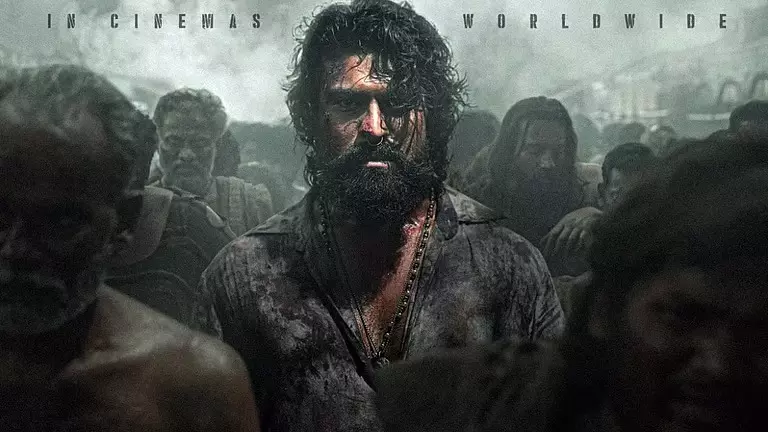

The debate around film runtimes has resurfaced with Ram Charan’s latest release Peddi, which runs for 3 hours and 9 minutes. While some viewers have pointed out a few lagging moments and extended sequences, industry veterans argue that runtime is no longer the deciding factor in a film’s success or failure.Producer-director M.S. Raju dismisses the notion that a movie must fit within a specific duration to engage audiences. “A filmmaker cannot make a movie with runtime as the primary consideration. The focus should always be on satisfyingly telling the story.
If the plot is fresh, the characters are compelling, and the conflict is engaging, audiences remain invested irrespective of the length. The idea that a film should be restricted to a particular duration is a myth,” he says.Recent Indian blockbusters seem to support his argument. Rangasthalam ran for 2 hours and 54 minutes and emerged as a massive success. Pushpa: The Rise stretched to 2 hours and 59 minutes, while Arjun Reddy crossed the three-hour mark at 3 hours and 2 minutes.
The trend became even more pronounced with Pushpa: The Rule and Animal, both running for 3 hours and 21 minutes. More recently, the Dhurandhar franchise pushed boundaries further, with the first film lasting 3 hours and 34 minutes and its sequel extending to 3 hours and 49 minutes.“Dhurandhar is one of the landmark films in Indian cinema for its new-age approach to the spy genre,” says Raju. “I have seen audiences remain seated even after the end credits started rolling. They needed time to come out of the world that the film had created. That is the magic of cinema when storytelling truly connects.”For decades, filmmakers operated under the belief that movies should ideally remain within two to two-and-a-half hours to retain audience attention.
The assumption was that anything longer risked losing viewers midway. However, changing viewing habits and evolving storytelling styles have challenged this conventional wisdom.Today's audiences appear more willing to spend extra time in theatres if the narrative justifies it. Strong character arcs, emotional depth, immersive worlds, and gripping conflicts have made viewers more accepting of longer runtimes. The success of recent blockbusters suggests that content quality matters far more than the duration displayed on a ticket.This trend is not limited to Indian cinema.
"Hollywood has also embraced lengthy narratives. Martin Scorsese’s Killers of the Flower Moon runs for 206 minutes, nearly three and a half hours, while Avatar: The Way of Water and The Batman also crossed the three-hour mark.
Despite their length, these films attracted substantial audiences because they offered rich storytelling experiences, says writer Gopi Mohan..The evolving success of long-format films indicates that the old two-and-a-half-hour rule may no longer be relevant. "Audiences today seem willing to invest time when a story keeps them emotionally and intellectually engaged. In the end, it is not the runtime that determines a film’s fate, but the strength of its storytelling. If the content captivates, viewers rarely watch the clock, concludes Gopi Mohan..