

p class="bodytext">The epigraph of Stephen Alter’s fascinating book, Wild Himalaya, is taken from a creation story of the Bugun tribe from Arunachal Pradesh. The tale, which appears in Myths of the North-East Frontier of India by Verrier Elwin, narrates how the Himalaya range came into being. “Long ago, before the earth or the sky was made, Zongma, who is the greatest of all, had two sons, Nipu and Nili. Nipu and Nili were without form; they were not human beings, they were not animals, nor were they like rocks. Many ages passed, and then Nili made the earth, and Nipu put the sky like a lid above it.
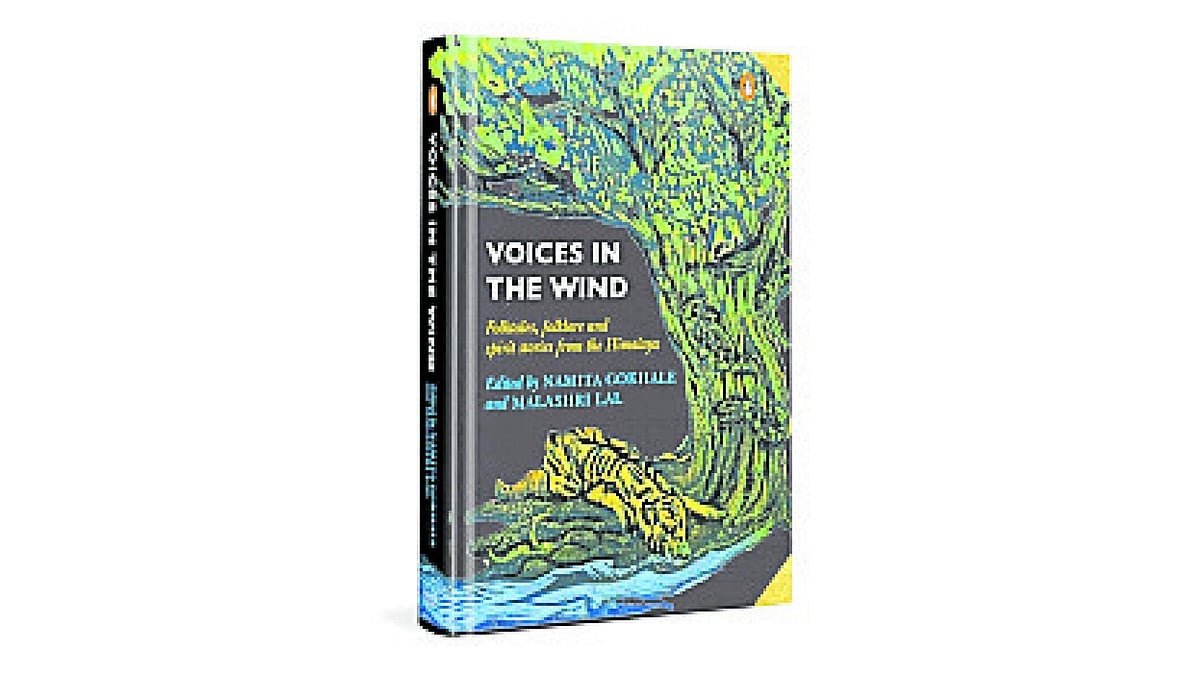
But the lid was too small, and Nipu said, ‘Brother, make the earth smaller so that the sky will fit it.’ So Nili pushed and pulled the soil together until the sky and earth were the same size, and as a result, parts of the world stood up as mountains.”.Though this story doesn’t feature in Voices in the Wind, edited by Namita Gokhale and Malashri Lal, their treasure trove of popular folklore, myths and legends encompassing the entire Himalaya range, and written by a host of writers, showcases the diversity of the region as well as its distinct identity. India has a rich oral tradition of songs and storytelling, and like fairy tales, as Gokhale reminds readers of this geography-specific anthology, they are not only for children but adults as well..Bhutan: Land of peak happiness.The beautifully designed edges and six woodblock prints by artist Nalinakshya Talukdar, who works tirelessly to preserve the ancient art form of woodcut printmaking, add to the charm and atmosphere of the book..In the Introduction, Gokhale mentions common threads of the Himalaya like flora and fauna, food and music, climate and cropping patterns, river systems, an animistic belief in nature’s power, “and the stubborn and cussed spirit of its people.”.The people of the land, particularly the women, keep the stories alive and breathing. As the editors point out, “given the shared geology, the emphasis on harmony between humans and nature recurs across all the folklore, though it takes different forms.” There are gods and demons, kings and queens, shamans and spirits, ghosts and demons, ogres and tricksters, an array of animals from the ibex (significant in Balti culture), shape-shifting Nagas (snakes) to the python, jackals, dogs, and trees which talk. .With a sweeping geography, extending from Jammu, Kashmir and Ladakh in the Western Himalaya, Himachal Pradesh and Uttarakhand in Central Himalaya, Bhutan, Sikkim and North Bengal in Central-Eastern Himalaya to Arunachal Pradesh, Assam, Manipur, Meghalaya, Mizoram, Nagaland and Tripura in North-Eastern Himalaya, there are plenty of tales and parables which are an essential part of life in the mountains..These are not just good versus evil homilies but an affirmation of the complexities of life.
For instance, the tale of the Snake Prince of Ladakh, writes Vyshnevi, “is a cherished legend, whispered by Ladakhi parents to their children on cold nights, a story of transformation, clever tricks and the enduring power of love.”.The stories from the Central Himalaya “position nature and divinity in intimate communion,” where forests, mountains and the river Sutlej are “figures of unimaginable power and beauty.” In Himachal Pradesh, the deodar tree or ‘tree of the god’ is considered sacred, and thus remains protected from being cut down, a tradition which helps prioritise “nature’s protection above all else.”.Fables from the Central-Eastern Himalaya region also have a strong human-animal-nature connect with the “spirits often protective rather than punishing”..Both Sikkim and Bhutan are polyphonic, and their many dialects echo across hills and dales, preserving their history and culture. A Tale of Pema, narrated by the Queen Mother of Bhutan, Gyalyum Ashi Dorji Wangmo Wangchuck, is the eponymous story of a spirited young girl who frees her parents from a terrible curse by showing remorse and compassion..The Bhutanese writer Kunzang Choden begins her stories in the tradition of her land, with Dangbo…o…, Dingbo…o, two words which draw people together to listen to a story from a long time ago. One of her tales is about Grandfather HeylayHeylay, who was not attached to material things. What brought him happiness was singing to his heart’s content. .The North-Eastern Himalaya, made up of the seven northeastern states, has a valued tradition of oral history as writers like Mamang Dai, Easterine Kire, Janice Pariat and Kynpham Sing Nongkynrih have highlighted in their works.
The natural world takes centre stage and “a sense of interconnectedness pervades: humans born from clouds and eggs, women birthing tortoises or tigers once human.” Spirit encounters abound, and as a character in Avinuo Kire’s Where the Cobbled Paths Lead says, “… if things get unbearable, we can always turn into hornbills [the emblematic bird of Nagaland] and fly far, far away.”.By gathering tales from all across the Himalaya, Gokhale and Lal have ensured that these diverse and unique stories of man and nature will be passed on.