
Sports
US law enforcement intercepted unknown drones over the Masters and Miami Grand Prix: Mullin
washingtonexaminer.com
•3 June 2026, 10:00 PM
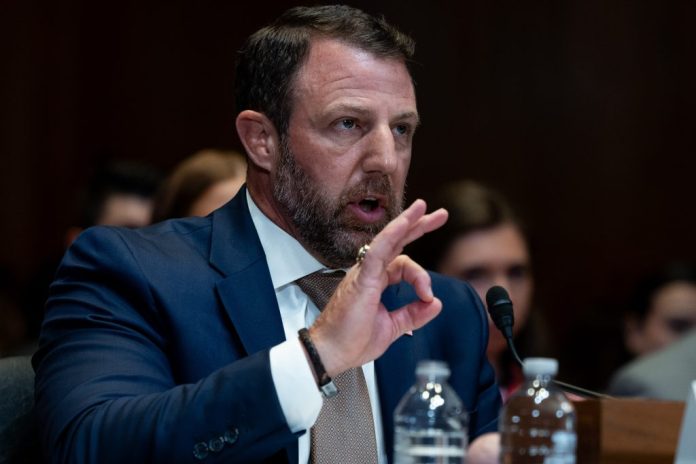

The secretary said the department “learned a couple things” from those instances, adding, “Every single day we improve but that is a huge concern that we have within the stadium. I also have concerns outside the stadium in the fan-fest area, in the soft areas that are outside security.” Mullin’s acknowledgment that two recent outdoor sports events had drone incursions underscores the new threats drones pose to all outdoor events, professional sports or otherwise. His admission comes about a week before the FIFA World Cup is set to begin, which the United States is jointly hosting with Canada and Mexico. “Drones are my biggest concern, too,” Mullin acknowledged in response to a question about the security surrounding the worldwide soccer tournament. “We have spent a tremendous amount of ability and money to be able to be very offensive with drones, but on the counter-drone measures, everybody’s a little behind.” Mullin said all 11 U.S. stadiums that will host World Cup matches have counter-drone technology, though he did not specify what type of equipment that included. There is no single way to resolve the threats posed by drones, according to experts, though many note that a layered defense is important so that there is more than one way to stop an attack, in part because each option has its advantages and disadvantages.
For domestic U.S. security and safety, it’s less likely they would try to engage an incoming drone kinetically due to concerns that it could miss the intended target or that debris from an impact could fall. Non-kinetic counter-drone technology includes but is not limited to radio-frequency cyber takeovers, directed-energy weapons, spoofing, and more.
The government’s counter-drone strategy involves the Department of Homeland Security, Federal Aviation Administration, Department of War, the Department of Justice, and state and local law enforcement. In March, the federal agencies published a warning to the public that violating sensitive airspace with drones, even if harmless, will be met with severe punishment. Collectively, they are all working together via Joint Interagency Task Force 401, led by Brig. Gen.
Matthew Ross. He is working with the military and allies about lessons learned overseas and how those strategies can be implemented domestically. IRAN HITS KUWAIT AND BAHRAIN IN ONE OF MOST DAMAGING ATTACKS SINCE CEASEFIRE Ross recently visited a “battle lab” in the Middle East that the task force established “to assist in the surge of c-UAS capability to our warfighters,” and has also visited Ukraine this year, Lt. Col.
Adam Scher, a spokesman for the task force, previously told the Washington Examiner. Scher added, “Brig. Gen. Ross saw firsthand that there is no ‘silver bullet’ that can defeat every drone threat.
What continues to be required in all theaters is a layered defense, including good intelligence to provide early warning, sensing in depth, passive protection, multiple defeat options, and proactive, entrepreneurial base commanders that are empowered to employ the full breadth of tools at their disposal to keep their forces and critical infrastructure safe.”