
Why parties should follow declining marginal utility
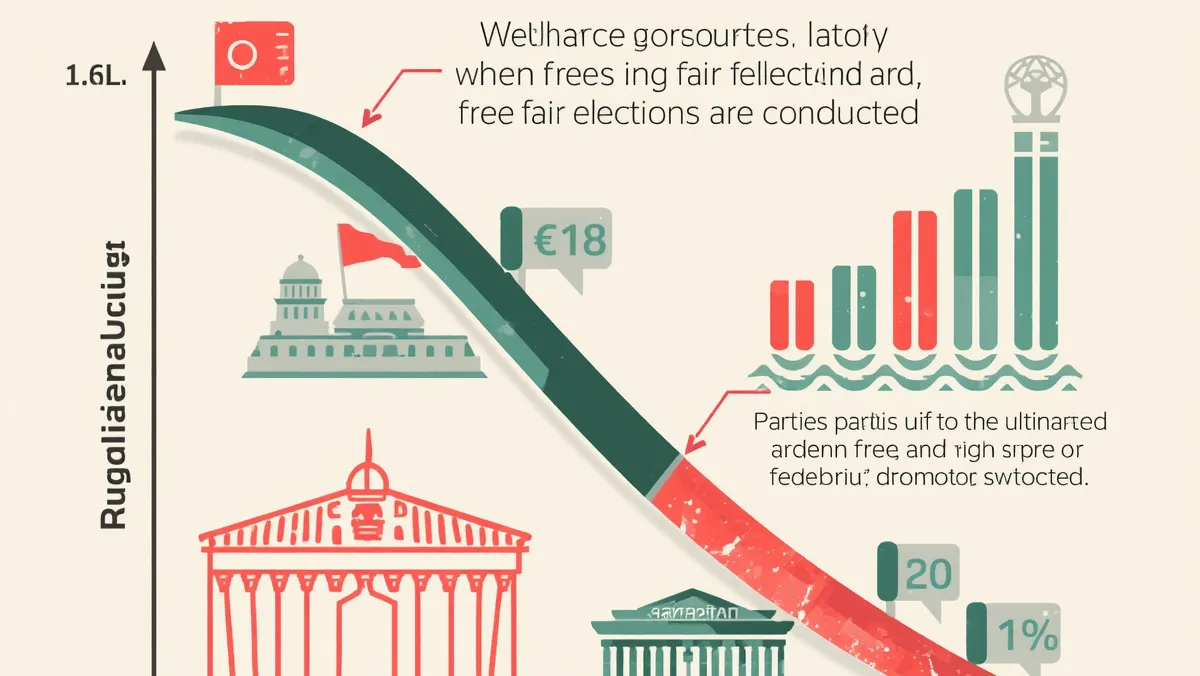

Voters expect elected representatives to fulfill their needs, which can be analyzed through the law of decreasing marginal utility. This economic concept relates expectations (demand) to the services provided by the elected body (supply), suggesting that satisfaction from these services diminishes over time as consumption continues, assuming all other factors remain constant.
Voting conduct reflecting the law of declining marginal utility can drive democratic transformation in party-controlled systems like Bangladesh, especially ahead of its 13th national election on February 12. Political parties must consider this dynamic, as voters assess marginal units when making decisions. The analogy suggests each election period is a marginal unit, and the law holds true when voters experience a free and fair atmosphere
The anti-incumbency period from 1991 to 2008 in Bangladesh featured relatively free and fair elections, contrasting with the period from 2008 to 2024, during which the Awami League (AL) won four consecutive elections, the last three of which were marked by significant irregularities. Following the overthrow of the AL's dictatorial rule in 2024, there is no longer a marginal unit for voters to base their decisions, highlighting a shift in the electoral landscape.
In a fair voting environment, the party that best meets voter expectations could theoretically determine the outcome of the February 12 election and the subsequent 14th national election. Historical trends from 1991 to 2008 indicate that to counteract anti-incumbency tendencies, the winning party on February 12 must exceed previous fulfillment levels of voter demands.
From 1991 to 2008, election winners must address the anti-incumbency trend in free elections. The concept of diminishing marginal utility, described by economist Alfred Marshall in 1890, states that as more units of a commodity are consumed, the utility gained decreases, although total utility increases. For example, enjoying slices of pizza yields diminishing satisfaction with each additional slice consumed.
Experience shows that the initial pleasure from consuming a commodity fades with each subsequent unit, leading to a point where further consumption yields less satisfaction or even discomfort. This decline in appetite occurs when demand stops while supply persists, demonstrating the economic principle of diminishing marginal utility, where the enjoyment derived from each additional unit decreases over time.
Utility in economics is defined as the degree of satisfaction, which is inherently subjective and varies among individuals, making it challenging to quantify. Economists use monetary utility to measure satisfaction across different utilities. Additionally, the study of group conduct, including voting behavior, falls within the interests of economists exploring the economic aspects of politics. Samuel J. Eldersveld, in his 1951 paper, emphasizes that "voting behavior" encompasses more than just the analysis of voting data, highlighting its complexity.
Voting behavior is influenced by individual psychological processes such as motivation, emotion, and perception. Eldersveld argues that this behavior should be studied within the context of governmental institutions, highlighting the roles of sociologists, social psychologists, and economists. The concept of "economic voting" describes how the economy affects voter support for incumbents.
An anti-incumbency tendency is observed in Bangladeshi national elections from 1991 to 2008, where voters consistently favored the opposition over the ruling party despite relatively free and fair conditions. This trend suggests that within a single term, the incumbent party's influence diminishes, as public demand surpasses expectations. The law of marginal utility in voting behavior has sustained democracy amidst various economic influences affecting voter decisions.
Political parties should recognize their decreasing significance and honor the people's right to express their views on margins. Given that progress without democracy has been seen as fascism in Bangladesh, the nation cannot tolerate another similar experience, especially with the upcoming election in February 2026.